Seeing dark spots around your vents, or noticing a musty smell every time the AC kicks on? Mold and mildew in an HVAC system are common, especially in warm, humid parts of Texas. The good news is that once you understand why it happens, you can take the right steps to deal with it and keep it from coming back. This guide covers the warning signs, the difference between surface mildew and mold inside the ducts, and what you can safely do yourself versus when to call a professional.
Why Mold Grows In and Around Vents
Mold needs three things: moisture, warmth and something to feed on, such as dust. An HVAC system can supply all three. When cold air from the AC meets warm, humid air, condensation forms on vent covers, ducts and the evaporator coil. Add the dust that builds up inside ductwork and you have ideal conditions. Common causes include:
- High indoor humidity, which is common in Texas summers
- An oversized AC unit that cools quickly but does not run long enough to remove moisture
- Leaky or poorly insulated ducts in a hot attic that “sweat”
- A clogged condensate drain line or drain pan
- Dirty filters and dust buildup inside the ducts
Warning Signs of Mold in Your Vents and Ducts
- Musty or earthy smell that gets stronger when the system is running
- Black, gray, green or white spots on vent covers, registers or the ceiling or wall around them
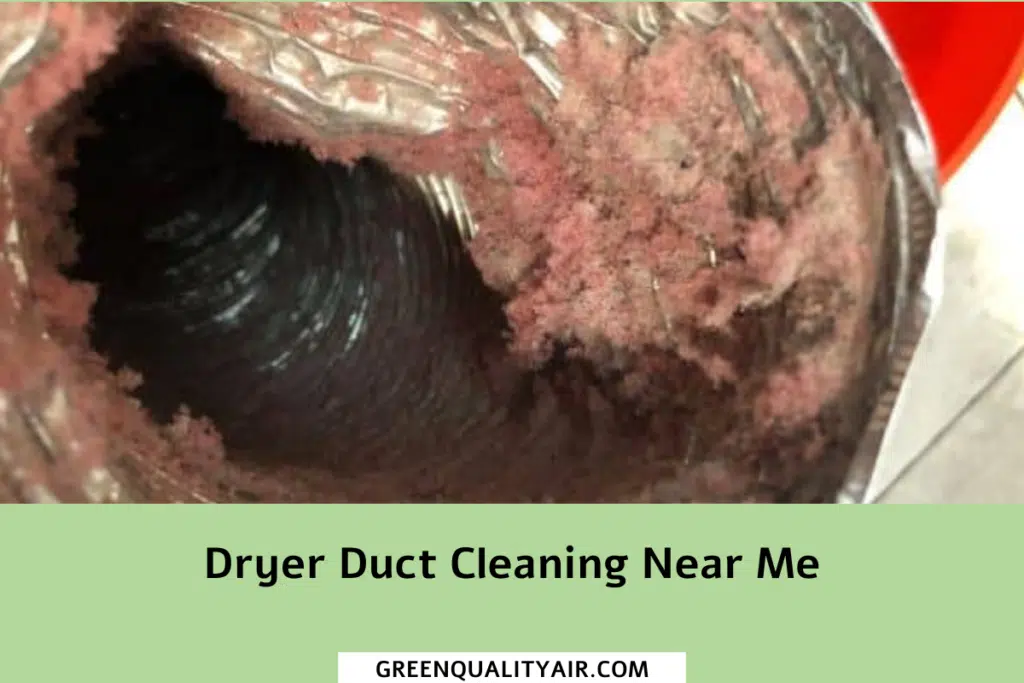
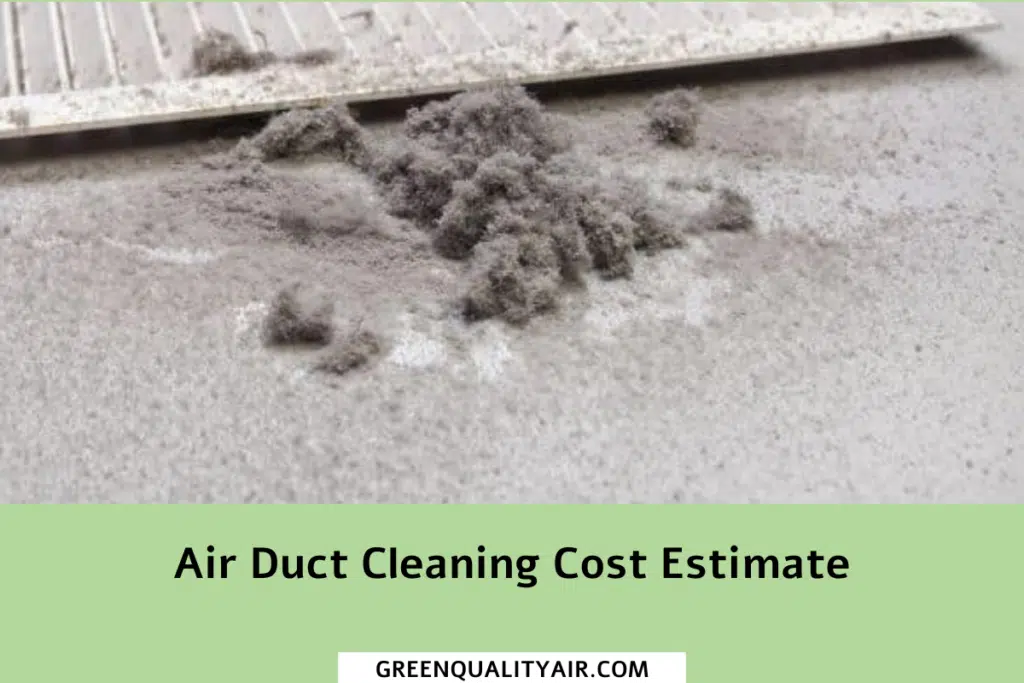
- Dust that comes out of vents looking dark or clumpy
- Allergy-like symptoms such as sneezing, a stuffy nose or itchy eyes that ease when you leave the house
- Visible condensation on vents or ducts
Mildew on Vents vs. Mold Inside the Ducts
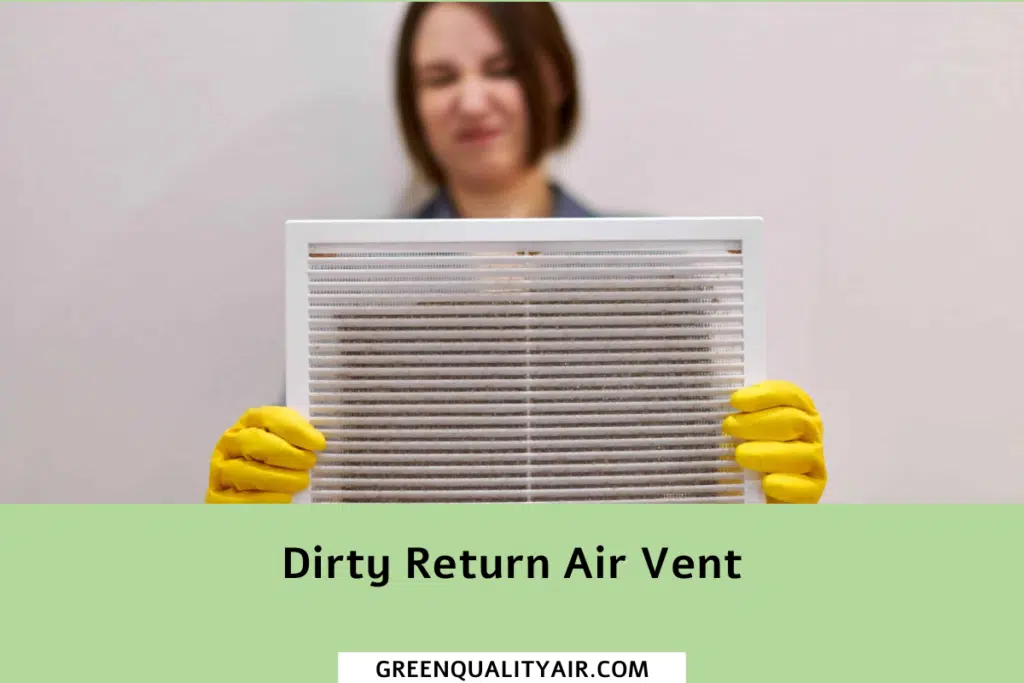
Mildew on vent covers or around AC vents is usually a surface problem caused by condensation. It often looks like a thin gray or black film and can generally be cleaned off the vent cover itself.
Mold inside the ducts or HVAC system is a bigger concern. If spots keep coming back after you clean the vent covers, or the musty smell comes from the system rather than one room, there is likely growth deeper in the ductwork, on the coil or in the drain pan. Wiping the vent will not fix that. You can learn more about one specific type in our article on white mold in air ducts.
Contact Us
What You Can Do Yourself
- Remove vent covers and wash them with warm water and mild detergent, then dry them completely.
- Replace your HVAC filter and keep up with regular changes.
- Keep indoor humidity under control with your AC or a dehumidifier.
- Make sure the condensate drain line is flowing and the drain pan is not holding water.
- Wear gloves and a mask when cleaning, and avoid spraying household cleaners into the ducts or onto the coil.
When to Call a Professional
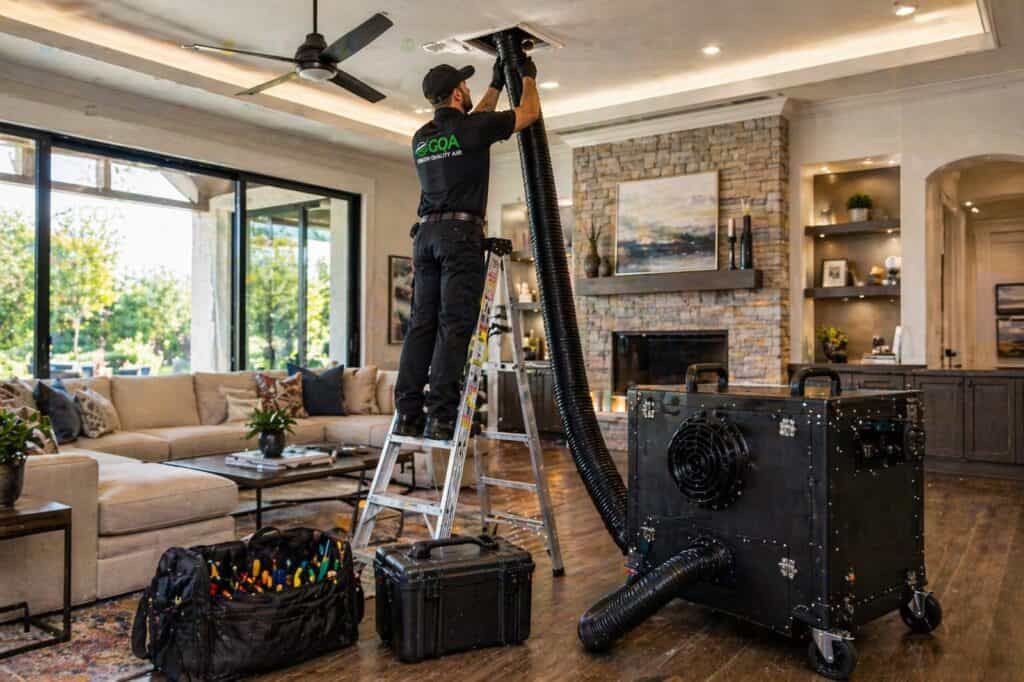
Call a professional if the mold keeps coming back, if you can smell it throughout the house, if you see growth inside the ducts, or if anyone at home has asthma or a weakened immune system. A professional service will inspect the system, find the moisture source, clean the ductwork with specialized equipment and, when needed, apply a treatment designed for HVAC systems. Fixing the cause of the moisture is just as important as removing the growth itself.
Questions to Ask Before You Hire
- Will you inspect the ducts, coil and drain pan, not just the vents?
- How will you find and address the source of moisture?
- What products do you use inside the system, and are they made for HVAC use?
- What can I do afterwards to keep mold from coming back?
How to Prevent Mold From Coming Back
- Keep indoor humidity in a comfortable range, especially in summer.
- Change filters regularly.
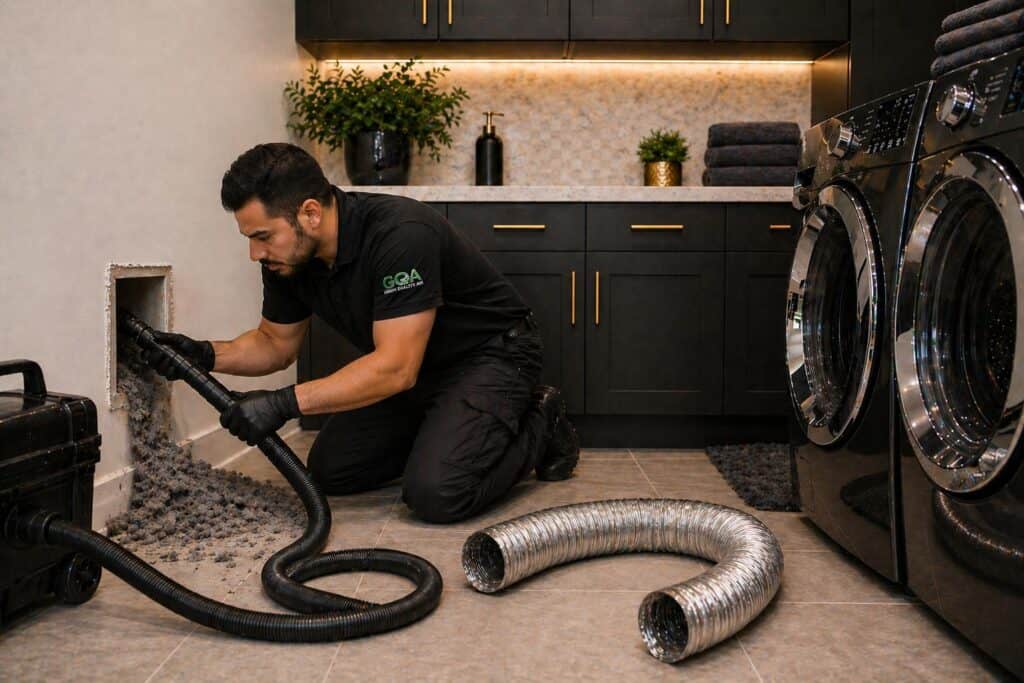
- Have your ducts cleaned periodically so dust does not give mold something to feed on. See how often to clean air ducts in Texas.
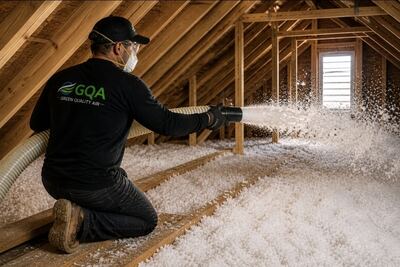
- Have leaky or sweating ducts sealed or insulated. Good attic insulation also helps reduce condensation.
Frequently Asked Questions
Is mold coming out of my vents dangerous?
Mold can trigger allergy and asthma symptoms and irritate the airways, and people with respiratory conditions or weakened immune systems are more sensitive to it. It should be dealt with promptly rather than ignored. If you have health concerns, talk to your doctor.
Can I just spray the vents with bleach?
Not recommended. Spraying cleaners into ducts or onto the coil can damage components and does not remove the moisture problem. Clean removable vent covers, and leave the inside of the system to a professional.
Why does mold keep coming back on my AC vents?
Usually because the moisture source has not been fixed. High humidity, condensation on uninsulated ducts or a clogged drain line will keep feeding new growth until it is addressed.
Will air duct cleaning remove mold?
Professional air duct cleaning removes the dust and debris mold feeds on and, combined with treatment and fixing the moisture source, is an important part of solving the problem.
Get Your Vents Checked
If you are seeing or smelling mold around your vents, Green Quality Air can inspect and clean your system. We serve Austin, San Antonio, Corpus Christi and surrounding Texas communities. Contact us to schedule a visit.